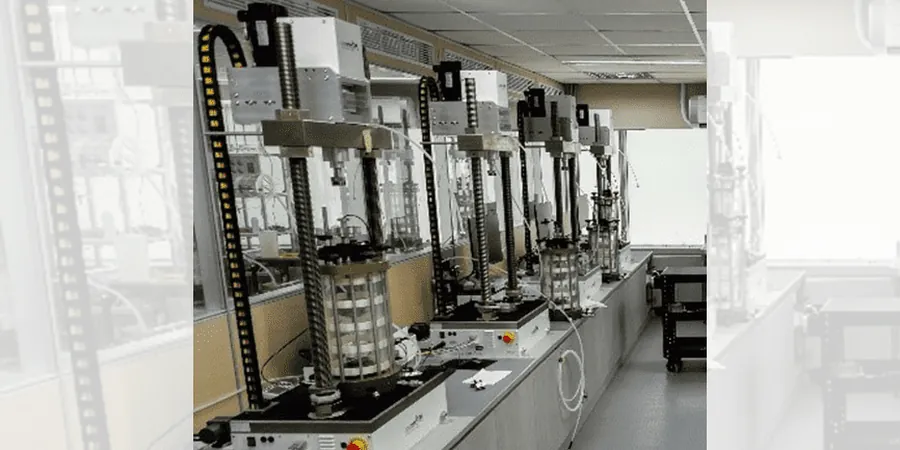
Porirua's geological landscape, shaped by the erosion of ancient greywacke ranges and infilled with deep alluvial and estuarine sediments, presents significant challenges for foundation engineers. The harbor basin and surrounding valleys, particularly around the city center and eastern suburbs, often feature compressible silts and clays up to 15 meters deep with a water table less than two meters below the surface. Understanding the undrained shear strength and consolidation characteristics of these soils is not a formality; it dictates the viability of any structure. We run consolidated-undrained (CU) and consolidated-drained (CD) triaxial test programs to extract friction angles and cohesion values specific to the Porirua formation, moving beyond generic textbook assumptions. For roading projects along State Highway 1, correlating these triaxial results with CPT test data provides a continuous strength profile that static calculations alone cannot offer.
Effective stress friction angles from triaxial testing in Porirua's estuarine clays are typically 3 to 5 degrees lower than residual soil assumptions, a gap that renders slope stability models non-conservative if ignored.
Approach and scope
Site-specific factors
The rapid urbanization of Porirua's flatlands in the 1960s and 70s, particularly the expansion into the Porirua Stream floodplain, often proceeded without modern geotechnical scrutiny. Subdivisions built on hydraulically placed fill or soft marine sediments now face differential settlement and, critically, a risk of cyclic softening during a large Wellington Fault event. The proximity of the Ohariu Fault system means a peak ground acceleration of 0.6g or higher is plausible for a 1-in-500-year event. Triaxial testing becomes essential in this context: cyclic triaxial tests allow us to quantify the excess pore pressure generation and axial strain accumulation under earthquake loading. For critical infrastructure and commercial buildings, ignoring the undrained cyclic behavior of these foundation soils is an untenable risk, potentially leading to bearing capacity loss or excessive post-liquefaction settlement that damages structural integrity.
Service video
Relevant standards
NZS 4402:1986 Methods of Testing Soils for Civil Engineering Purposes, NZS 3404 Parts 1 & 2: Steel Structures (loading and geotechnical references), NZS 4402: Standard Test Method for Consolidated Undrained Triaxial Compression Test for Cohesive Soils, NZGS Guidelines for Field and Laboratory Testing of Soils
Related technical services
Effective Stress Triaxial Suite
Consolidated drained (CD) and undrained (CU) tests with high-accuracy pore pressure transducers to derive c' and φ' for long-term slope stability and foundation design in Porirua's overconsolidated clays.
Cyclic Triaxial Testing
Load-controlled cyclic tests to evaluate liquefaction susceptibility and cyclic softening of estuarine and alluvial sands beneath the city center, following the Idriss-Boulanger framework.
Unconsolidated Undrained (UU) Tests
Rapid strength assessment for cohesive fill quality control during earthworks for subdivisions and commercial developments along the Transmission Gully corridor.
Typical parameters
Questions and answers
How much does a triaxial test cost in Porirua?
A standard three-stage CU or CD triaxial test program, including isotropic consolidation and pore pressure measurement, ranges from NZ$3,400 to NZ$4,150 per specimen, depending on the required confining stress levels and the complexity of the saturation phase.
What is the minimum specimen size for a triaxial test?
We typically test undisturbed specimens with a 50 mm diameter and a 2:1 height-to-diameter ratio, trimmed from Shelby tube samples. For gravelly soils, a 70 mm diameter specimen is necessary to maintain a minimum 6:1 ratio of diameter to maximum particle size, as per NZGS guidelines.
How does a CU test differ from a CD test?
In a consolidated-undrained (CU) test, pore pressure is measured during shear without allowing drainage, giving us undrained shear strength and effective stress parameters. A consolidated-drained (CD) test allows full drainage during slow shear, directly measuring drained friction angles for long-term stability analysis of slopes and retaining walls in Porirua.
What B-value do you require for saturation?
We apply a back-pressure saturation technique until the Skempton pore pressure parameter B reaches a minimum of 0.95. For stiff, overconsolidated clays, this may require back pressures exceeding 500 kPa over several hours to dissolve any residual air, ensuring accurate pore pressure response during shear.