Geotechnical laboratory testing forms the backbone of reliable foundation design and earthworks assessment in Porirua, a city defined by its dynamic coastal landscape and complex underlying geology. The laboratory category encompasses the controlled analysis of soil, rock, and aggregate samples collected from sites across the region, providing the empirical data engineers need to move beyond assumptions. In a setting where residential subdivisions climb steep ridgelines and commercial developments press against harbour margins, understanding the physical and mechanical properties of the ground is not just a regulatory requirement but a fundamental safeguard against slope instability and settlement failure.
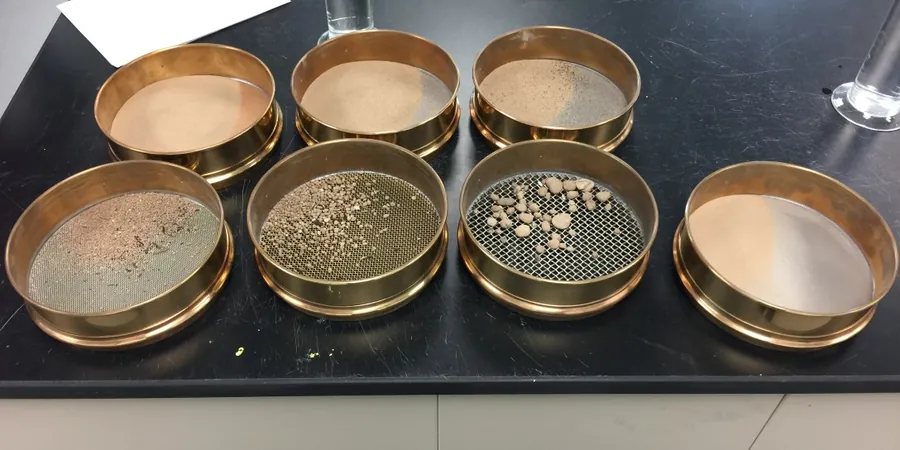
The local geology of Porirua presents a distinctive challenge that makes laboratory testing particularly critical. Much of the city is underlain by weathered greywacke, a rock formation that can degrade into a matrix of silty clays and angular gravels with highly variable strength characteristics. These soils often display significant sensitivity to moisture content, a concern amplified by Porirua's exposure to heavy rainfall events and occasional seismic shaking. Without precise classification through works like grain size analysis, the potential for differential settlement or liquefaction in these materials cannot be accurately quantified, leaving projects vulnerable to long-term performance issues.
New Zealand's regulatory framework mandates rigorous geotechnical investigation in line with NZS 4404:2010 for land development and the Building Code clause B1, which requires structures to withstand both ultimate and serviceability limit states. The Ministry of Business, Innovation and Employment (MBIE) guidelines further reinforce the need for laboratory-derived parameters when designing foundations on soils with low bearing capacity or high reactivity. In Porirua, where the Porirua City Council enforces strict consenting processes under the Resource Management Act, reports submitted without validated Atterberg limits data or consolidated strength testing often face delays, making laboratory work an essential step in the project timeline rather than an optional extra.
The types of projects that routinely depend on this category of testing span from single-dwelling builds on compacted fill sites to large-scale public infrastructure such as the Transmission Gully motorway corridor. Land developers preparing a subdivision on the hills above Whitby require particle size distribution curves to design effective stormwater infiltration systems, while structural engineers designing retaining walls along the Porirua Stream need accurate shear strength parameters to prevent lateral movement. Even smaller renovation projects involving cut-and-fill operations benefit from laboratory classification to confirm that imported fill meets the specified compaction and material standards, avoiding costly rework and compliance issues.
Questions and answers
Why is laboratory testing necessary before building in Porirua's hill suburbs?
Porirua's hill suburbs are often underlain by weathered greywacke and colluvium that can lose strength when saturated. Laboratory testing determines the soil's grading, plasticity, and shear strength, allowing engineers to design foundations and retaining walls that account for slope stability risks. Without this data, the long-term performance of structures cannot be reliably predicted under the region's rainfall and seismic conditions.
How do New Zealand standards influence the scope of laboratory testing?
New Zealand standards such as NZS 4404:2010 and the Building Code clause B1 establish the minimum requirements for geotechnical investigation. These standards require laboratory-derived parameters like undrained shear strength and compaction characteristics to verify that design assumptions meet both ultimate and serviceability limit states. Councils like Porirua City rely on this compliant data to process resource and building consents efficiently.
What soil properties are most critical for foundation design in the Porirua basin?
The most critical properties include grain size distribution, which influences drainage and liquefaction potential, and Atterberg limits, which define the soil's reactivity to moisture changes. In the Porirua basin, where alluvial silts and clays are common, these properties directly affect bearing capacity, settlement estimates, and the selection of appropriate foundation types for both residential and commercial structures.
Can laboratory results help reduce construction costs and delays in Porirua?
Yes, accurate laboratory results can optimise earthworks specifications and foundation design, preventing over-engineering or unexpected ground conditions during construction. Classifying fill materials and confirming compaction compliance through testing reduces the risk of consent rejections and costly remedial work. Early investment in a comprehensive laboratory program often shortens project timelines by avoiding redesign and site stoppages.