Porirua's coastal terraces and alluvial valleys present a specific challenge: silty clays that shift from stiff to sticky with just a small change in moisture. The harbour humidity and a mean annual rainfall near 1300 mm keep near-surface soils in a delicate balance. A cut that drains well in February can turn into a workability problem by June. For any earthworks contractor moving fill along Whitford Brown Avenue or benching into weathered greywacke-derived colluvium, knowing the exact moisture boundary between plastic and liquid states is non-negotiable. That is where the Atterberg limits come in. The liquid limit, plastic limit, and plasticity index define how a soil will behave during compaction, how much it will shrink or swell, and whether it can be re-used as engineered fill under NZS 4404:2010. When fill fails a compaction spec, the root cause is often a plasticity index higher than the borrow source report suggested—exactly the kind of mismatch a Proctor test together with Atterberg data can catch before it becomes a costly rework.
A plasticity index above 25 in Porirua's alluvial silts often signals a material that will pump under compaction plant—classify it right the first time and you avoid re-rolling failed lifts.
Approach and scope
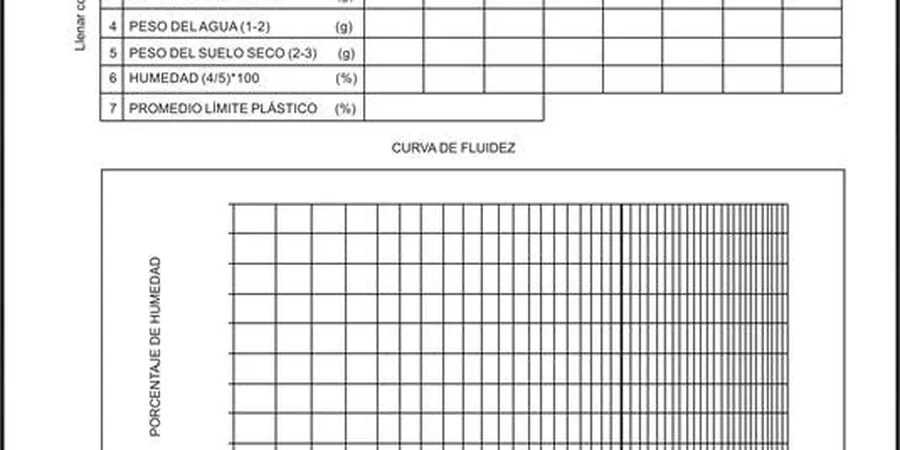
What makes the test valuable for Porirua jobs is its repeatability. The Casagrande cup method, carried out on the fraction passing the 425 μm sieve, gives the liquid limit. The plastic limit is determined by rolling 3 mm threads until they crumble. The difference is the plasticity index, which feeds directly into the NZGS soil classification and informs the Unified Soil Classification System (USCS) symbol that appears on every earthworks specification. For weathered bedrock transitions common across the Belmont and Horokiri hills, the plasticity index also flags the potential for slickensided shear surfaces that compromise cut stability.
Site-specific factors
The most frequent and expensive mistake we see is a contractor accepting a borrow pit classification from a geological map without verifying the plasticity index on the actual extracted material. A regional description of 'moderate plasticity clay' can hide a PI swing from 15 to 35 within a single pit face. When that high-PI material ends up in a controlled fill under a slab-on-grade in Aotea or Papakowhai, the result is differential heave during wet winters, cracked floor slabs, and a liability chain that lands on the earthworks subbie. Another common oversight is ignoring the liquidity index when re-assessing a wet cut after heavy rain. A soil at 1.0 liquidity index has zero strength—pushing a scraper through it turns the cut floor into a soft spot that no amount of benching will fix. An Atterberg test on a bag sample taken at the right depth costs far less than a day of downtime waiting for a geotech to re-log a failed excavation.
Relevant standards
NZS 3404: Parts 2.5 & 2.6 — Liquid and plastic limit determination, NZS 4404:2010 — Earthworks for residential development, NZGS Soil Classification Guidelines (consistent with NZS 4402-17e1 USCS)
Related technical services
Liquid Limit & Plastic Limit (Atterberg Suite)
Full Casagrande cup and thread-rolling test on the minus 425 µm fraction. Delivers LL, PL, PI, and the USCS/NZGS classification symbol for fill acceptance, borrow source qualification, and soil reactivity assessment.
Plasticity Index for Earthworks Compliance
Targeted PI-only testing when the liquid and plastic limits are already known but batch variability needs checking. Used during bulk earthworks to confirm that imported fill stays within the specified PI range before compaction.
Combined Atterberg & Compaction Control Package
Atterberg limits paired with standard Proctor compaction testing on the same sample. Gives the full picture: classification, optimum moisture content, and maximum dry density—essential for achieving 95% modified compaction sign-off.
Typical parameters
Questions and answers
What does an Atterberg limits test cost for a Porirua job?
For a single sample collected in the Porirua area, the Atterberg suite (liquid limit, plastic limit, and plasticity index) ranges between NZ$100 and NZ$180, depending on whether you need the full classification report or just the numeric results. Multi-sample pricing is available for borrow pit campaigns and large earthworks projects.
How long does the lab test take from sample drop-off to report?
Standard turnaround is three working days. We also run an express service for active earthworks where a result is needed within 24 hours to keep compaction plant moving—just let the lab know when you submit the bag sample.
Can the test be run on a disturbed bag sample or does it need an undisturbed core?
Atterberg limits are run on disturbed bag samples, not undisturbed cores. About 500 g of material passing a 425 µm sieve is sufficient. The key is to avoid drying the sample in the sun or leaving the bag open, because moisture loss before testing can shift the plastic limit reading.
What plasticity index triggers a reactive soil classification for residential slabs in Porirua?
Under NZS 3604:2011, a soil with a plasticity index greater than 15% and a linear shrinkage exceeding 8% is typically classified as moderately to highly reactive. Porirua's weathered pumiceous silts often exceed both thresholds, which means the foundation design must account for ground movement—Atterberg data provides the first definitive yes-or-no on reactivity.