In-situ testing forms the cornerstone of reliable geotechnical engineering in Porirua, providing direct measurements of soil and rock properties without disturbing the natural ground conditions. This category encompasses a range of field-based investigations that evaluate ground strength, density, permeability, and deformation characteristics exactly where they matter most — beneath the proposed structure. For Porirua's growing residential subdivisions, commercial developments, and infrastructure upgrades, these tests deliver the critical data engineers need to design foundations, retaining walls, and earthworks that perform safely over the long term.
Porirua's geological setting presents distinctive challenges that make thorough in-situ investigation essential. The city straddles a complex landscape shaped by ancient greywacke bedrock, weathered hill slopes, and deep alluvial valleys. Much of the urban area sits on the Porirua Harbour catchment, where soft marine sediments, estuarine deposits, and variable fill materials create highly compressible ground conditions. The active Wellington Fault system runs nearby, contributing to fractured rock masses and areas of seismic sensitivity. Without proper field testing, these hidden ground variations can lead to unexpected settlements, slope instability, or inadequate foundation performance.
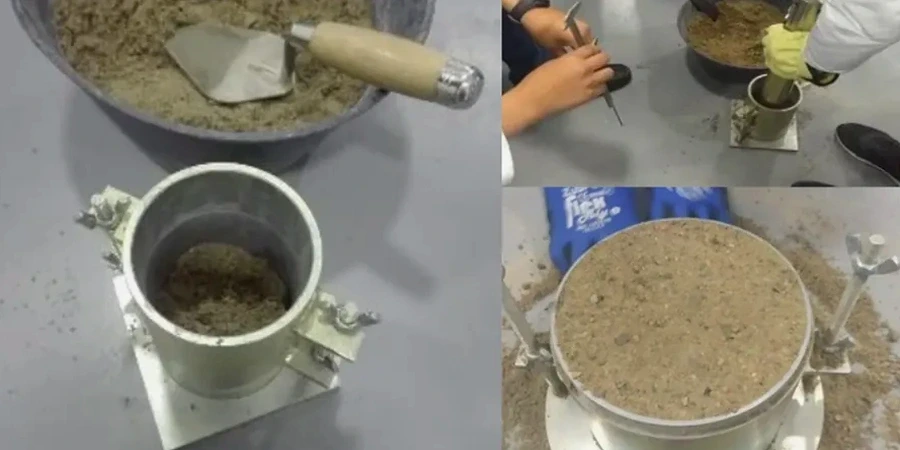
All in-situ testing conducted in Porirua must comply with New Zealand Standards, particularly NZS 4402 (Methods of testing soils for civil engineering purposes) and the relevant parts of NZS 1170 for structural design actions. The New Zealand Geotechnical Society's guidelines and the Building Code clause B1 (Structure) further mandate that site investigations be appropriate for the scale and risk of the project. For density testing, methods like the field density test (sand cone method) follow NZS 4402:1986 Test 5.1, ensuring compacted fills meet specified relative compaction levels — a common requirement for Porirua City Council earthworks consent sign-offs.
Projects across Porirua that routinely require in-situ testing include residential platforms on cut-and-fill sites in Aotea and Whitby, commercial buildings in the Kenepuru industrial zone, and infrastructure such as the Transmission Gully motorway corridor. Retaining wall designs on sloping sections in Titahi Bay demand accurate strength parameters, while stormwater soakage systems in Cannons Creek rely on field permeability assessments. Roading projects throughout the city require proof-rolled subgrade verification and basecourse compaction testing to prevent premature pavement failure under heavy traffic loads.
Available services
Questions and answers
What is in-situ testing and why is it preferred over laboratory testing?
In-situ testing measures soil and rock properties directly in the ground without removing samples, preserving natural stresses, moisture conditions, and fabric. This avoids the disturbance that occurs during sampling and transport. While laboratory tests remain valuable, in-situ methods often deliver more representative data for parameters like density, strength, and permeability, particularly in sensitive soils common in Porurua's harbour margins.
When does the Porirua City Council require in-situ testing for a building consent?
The Council typically requires in-situ testing when site investigations reveal variable or poor ground conditions, when earthworks exceed specified thresholds, or for structures on filled land. Proof of compacted fill density is often mandatory for engineered fills. The exact triggers depend on the project scale, site zoning, and geotechnical risk assessment, as outlined in the Building Code and local earthworks bylaws.
How many in-situ tests are needed on a typical residential section in Porirua?
The number depends on site variability, structure type, and the investigation scope. A single-storey dwelling on uniform ground might require a few test pits with in-situ strength assessments, while a complex sloping site with fill may need multiple density tests per lift, permeability testing, and deeper profiling. A chartered geotechnical engineer determines the appropriate frequency to meet NZS 4402 and Building Code requirements.
Can in-situ testing identify liquefaction risk in a Porirua property?
Yes, specific in-situ methods like cone penetration testing (CPT) and standard penetration testing (SPT) are fundamental to liquefaction assessments. These tests measure soil density, strength, and layering, which are used alongside groundwater data to evaluate the potential for earthquake-induced ground failure. Given Porirua's seismic setting and areas of loose saturated sediments, this testing is often critical for informed foundation design.